Queer Places:
Hadley House, Hadley Green Road, Monken Hadley, Barnet, Hertfordshire / Greater London, EN5 5PY
The Beacon House, Hadley Green Road, Monken Hadley, Barnet, Hertfordshire / Greater London, EN5 5PY
The Plash, Todds Green, Stevenage, Hertfordshire, SG1 2JE, United Kingdom
Whinfell Quarry Garden, Quarry, 7 Whinfell Ct, Sheffield S11 9QA, United Kingdom
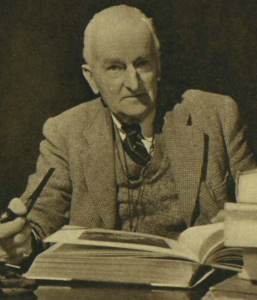 Clarence Elliott (November 3, 1881 - February 18, 1969) was born on November 3, 1881, at Hadley House on Hadley Green Road in Monken Hadley,
Hertfordshire, near Barnet. Educated at Giggleswick School in West Yorkshire, he early on developed a passion for botany and horticulture. He formally
trained in the trade at two prestigious British nurseries—Rivers of Sawbridgeworth and Backhouse of York—before embarking in 1902 on a three-year venture
as a fruit farmer near Paarl in South Africa. Upon returning to England in 1905, he resided for a time at Beacon House in Hadley, Herts. Around this
period, he donated and sold several archaeological artifacts, such as flints from Washington, USA, to the British Museum and to collector Dr. W. A.
Sturge, though his name was mistakenly entered as "Charles Elliott" in the museum's accession register.
Clarence Elliott (November 3, 1881 - February 18, 1969) was born on November 3, 1881, at Hadley House on Hadley Green Road in Monken Hadley,
Hertfordshire, near Barnet. Educated at Giggleswick School in West Yorkshire, he early on developed a passion for botany and horticulture. He formally
trained in the trade at two prestigious British nurseries—Rivers of Sawbridgeworth and Backhouse of York—before embarking in 1902 on a three-year venture
as a fruit farmer near Paarl in South Africa. Upon returning to England in 1905, he resided for a time at Beacon House in Hadley, Herts. Around this
period, he donated and sold several archaeological artifacts, such as flints from Washington, USA, to the British Museum and to collector Dr. W. A.
Sturge, though his name was mistakenly entered as "Charles Elliott" in the museum's accession register.
In 1906, Elliott established the Six Hills Nursery near Stevenage, Hertfordshire—taking the name from the nearby ancient burial mounds—and lived at a
property known as The Plash in Stevenage. The nursery quickly grew world-famous for its specialized alpine and rockery plants. Over the decades, Six
Hills employed and nurtured several renowned figures in British horticulture, including Graham Stuart Thomas, Will Ingwerson, and E. K. Balls. Elliott
was an active exhibitor at Royal Horticultural Society shows, earning numerous awards for his innovative rock garden displays, and in 1929 he became a
founding member of the Alpine Garden Society. His expertise led to major commissions, such as his 1912 design of the limestone rock garden and water
cascade for Samuel Doncaster at the Whinfell Quarry Garden in Sheffield.
Beyond his nursery operations, Elliott gained legendary status as a plant hunter and explorer. Although his early travels outside Europe were limited
to South Africa and the Falkland Islands, he launched major South American collecting expeditions with his friend and botanical collaborator, William
Balfour Gourlay, between 1927 and 1930. Their journeys took them through Havana, Panama, Callao, and Valparaíso, venturing deep into Coquimbo, the Andes,
Temuco, Tierra del Fuego, and Patagonia, followed by a subsequent voyage to western North America in 1931. During these travels, Elliott collected
widespread wild plant species, famously introducing the fragrant Leucocoryne ixioides ("Glory of the Sun") to Western cultivation and discovering a
unique bisexual dwarf form of Ruscus aculeatus (later named 'Elizabeth Lawrence'). He also famously spotted a hardy, dramatic fuchsia in the nearby
garden of a neighbor during a tennis party, propagating it into the world-famous cultivar 'Mrs Popple', alongside other famed selections like Nepeta 'Six
Hills Giant' and Saxifraga 'Clarence Elliott'.
Elliott's expeditions were equally notable for the menagerie of livestock and fauna he brought back to Britain. In addition to supplying London Zoo
with Galapagos tortoises, pygmy deer, giant edible frogs, and rare birds, he brought back blue-egg-laying Araucana hens from Patagonia. These birds were
shared with geneticist R. C. Punnett at Cambridge University for poultry breeding research, laying the foundational stock for the modern commercial
pastel-egg brand known today as Clarence Court.
Throughout his life, Elliott was closely tied to the social and intellectual circles of early 20th-century horticulture, including connections within
the LGBTQ+ community of plant collectors. Most notably, he maintained a close relationship with
Reginald Farrer, the legendary traveller, author, and plant explorer widely remembered as the "father of rock
gardening." The two frequented major botanical expeditions together, such as their documented stay at Clarence Bicknell's Casa Fontanalba in July 1910,
sharing a passion for high-altitude flora and rock garden design.
On November 28, 1911, Elliott married Phyllis Mary Eyre in Croydon, London. Together they raised three children: Paul Kingsley, Joseph John, and
Linnaea Clarence. Elliott was also a prolific writer and editor; early in his career in 1907, he revised and reedited the botanical classic Flowers of
the Field by Rev. C. A. Johns, authored works on rock garden design, and later penned the long-running column "In an English Garden" for the Illustrated
London News from 1951 to 1964.
Following the Second World War, the original Six Hills Nursery site in Stevenage was acquired by the government to build the Stevenage New Town
development, leading to the nursery's closure in 1954. Elliott subsequently retired to Broadwell in the Cotswolds, Gloucestershire, settling near his son
Joe Elliott, who continued the family legacy by operating his own nursery. Clarence Elliott passed away on February 18, 1969, in Cheltenham,
Gloucestershire, leaving behind a profound legacy in British garden design and global plant introduction.
References:
- British Museum Collection Records: Details regarding biographical entries, address histories (Beacon House in Hadley and The Plash in Stevenage), and early accession records covering Elliott's artifact acquisitions and donations.
- The Alpine Garden Society Archives: Primary records documenting Elliott as a founding member (1929), along with archived reports on his alpine collecting trips, nursery innovations, and show awards.
- Royal Horticultural Society (RHS) Archives & Journal of the Royal Horticultural Society: Documentation of Elliott’s exhibition awards, plant introductions (e.g., Fuchsia 'Mrs Popple', Saxifraga 'Clarence Elliott'), and committee contributions.
- Casa Fontanalba Visitors' Book (July 1910): Historical registry maintained by Clarence Bicknell recording the joint visit and botanical excursions of Clarence Elliott and Reginald Farrer.
- Illustrated London News (1951–1964): Contains Elliott's weekly gardening column, "In an English Garden."
- Gardeners' Chronicle & The Garden: Contemporary 20th-century horticultural journals featuring articles, collection logs, and obituaries written by and about Elliott.
- Historic England / National Heritage List for England: Entry No. 1001431 (Whinfell Quarry Garden), documenting Elliott's 1912 design of the limestone rock garden and cascade.
- Johns, C. A. Flowers of the Field (Revised and edited by Clarence Elliott, 1907).
- Elliott, Clarence. Rock Garden Plants (1935).
- Cambridge University Genetics Department Papers: Historical records concerning Reginald Punnett’s breeding experiments with Araucana poultry brought back by Elliott from Patagonia.
- Royal Botanic Garden Edinburgh & Royal Botanic Gardens, Kew: Herbarium and specimen records from the 1927–1930 South American expeditions conducted by Clarence Elliott and William Balfour Gourlay.
Support this project
This website is a passion project researched, developed, and funded entirely by me. If you find the content valuable and would like to help support the ongoing research and hosting costs, any contribution is deeply appreciated.
Thank you for keeping this independent resource alive!
My books on Amazon: Elisa Rolle's books
BACK TO HOME PAGE